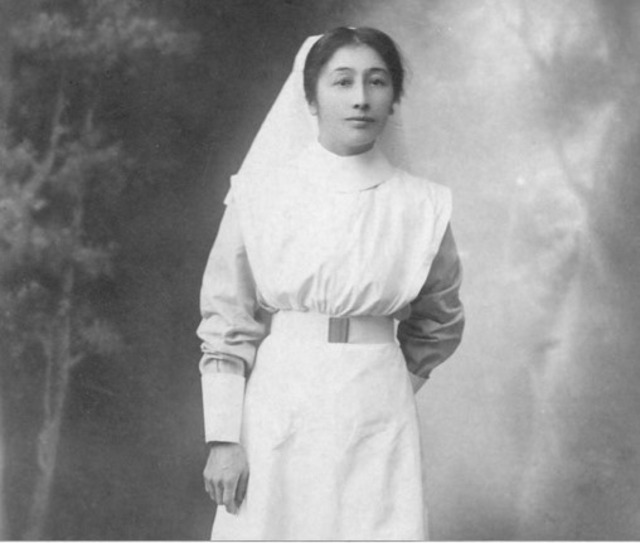
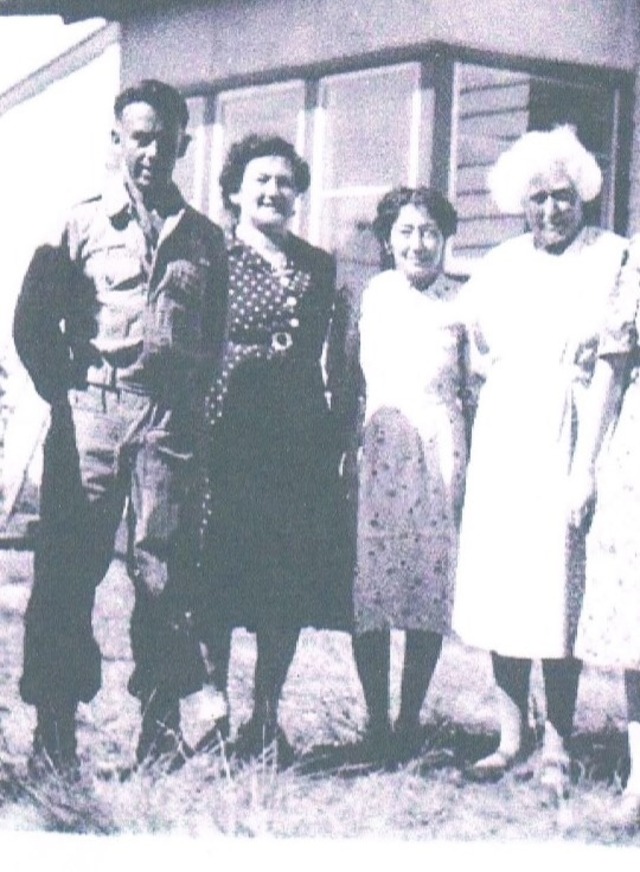
Monbulk locals who have delved into the town’s history may have come across mentions of Miss Artso, remembered as a kind and gentle woman who helped out at Sunday School at St George’s Church.
She also assisted at the local confectionery and haberdashery shop, originally Williams’ shop, later Taylor’s and worked at Miss Sarah and Annie Siddle’s post office and store.
Yet beyond these glimpses, the Monbulk Historical Society (MHS) knew very little about her life.
A review of local newspapers revealed that Miss Artso loved baking, preserving fruits, and making jams.
She regularly won prizes at the Monbulk Flower and Fruit Show, which ran from 1918 to 1937.
Recently, the MHS’s understanding of Miss Artso deepened after being contacted by Geoff Artso, her great-nephew, who was researching his family history.
Mr Artso revealed that Ms Artso’s full name was Emily Martha Artso, born in Warrnambool in 1885.
Contrary to previous assumptions, she was not Japanese but half Chinese; her father, William Ah Chow (or Artsow), had been born in Guangzhou, China, and emigrated to Australia during the gold rush.
Ms Artso was the fifth of ten children born to William and Martha Hammond.
Ms Artso trained as a nurse and applied for a position at Port Fairy Hospital in 1916, around this time, she met Nurse Julia Mary Brown, who ran a private hospital in Portland called Kia Ora.
By early 1917, both women had moved to Monbulk, where Julia Brown was recorded as renting a property called Ringlands on Invermay Road.
The property appears to have operated as a guest house and private hospital, a common practice at the time to supplement income.
Ms Artso is believed to have lived nearby and worked alongside Nurse Brown, she helped deliver babies across the Monbulk district, often travelling on horseback, and assisted local doctors such as Dr Jorgensen of Belgrave.
However, as the world edged towards the Second World War, stories emerged of local youths throwing rocks at Emily’s house, mistakenly believing she was Japanese.
While these incidents may have influenced her decision, the more likely reason for her departure in 1939 was the death of Nurse Brown, neither woman married, and Ms Artso moved to Geelong, where she lived until her death in 1975 at the age of 90.
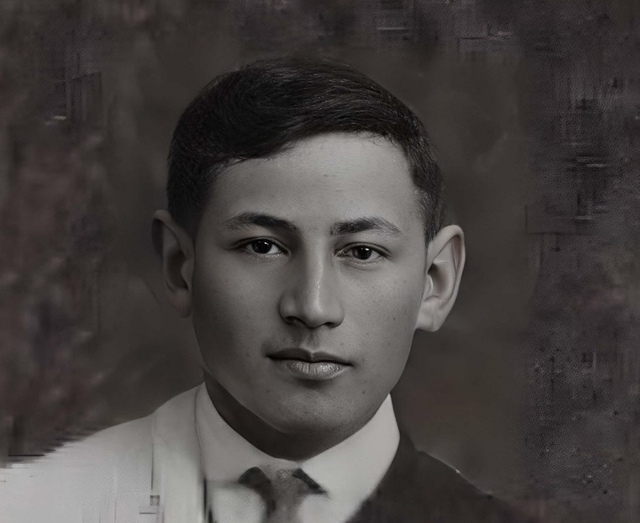
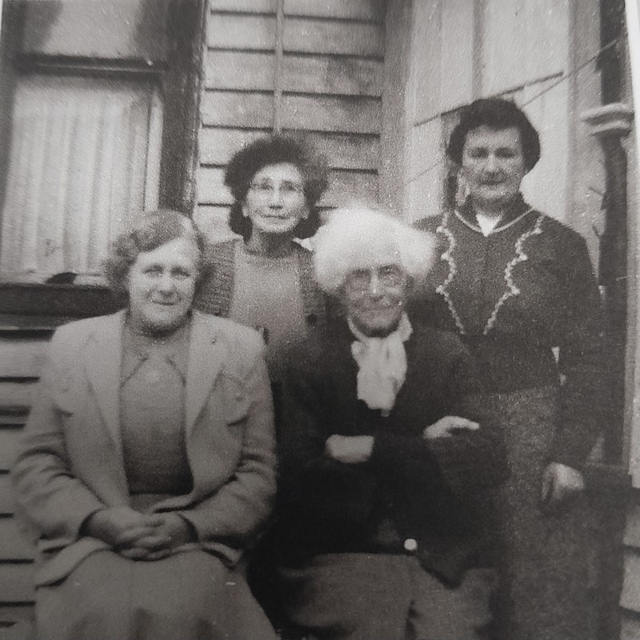
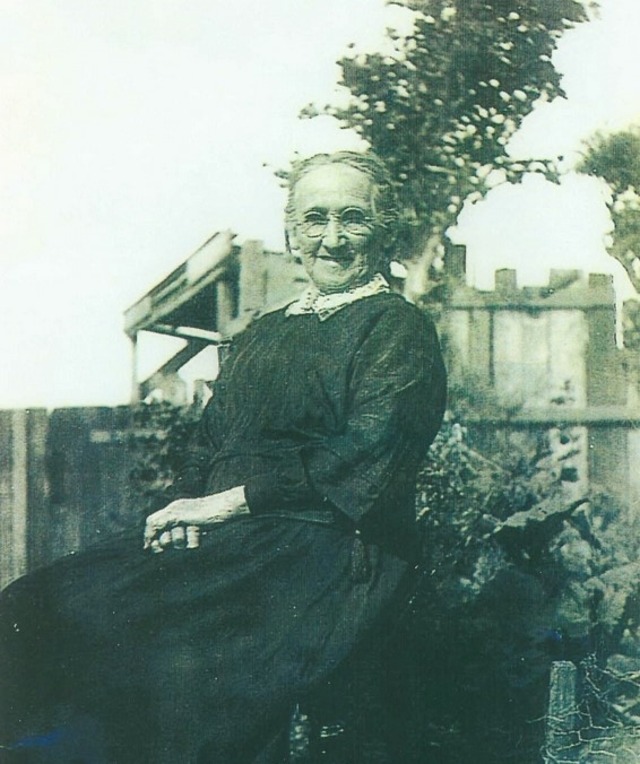
The MHS credits Mr Artso for providing photographs and additional details that have helped piece together the story of these two remarkable women, who quietly shaped the Monbulk community over more than two decades.
The Historical Society continues to seek further information about Emily Artso or Julia Brown.
This information was sourced from Monbulk Historical Society’s Facebook page.