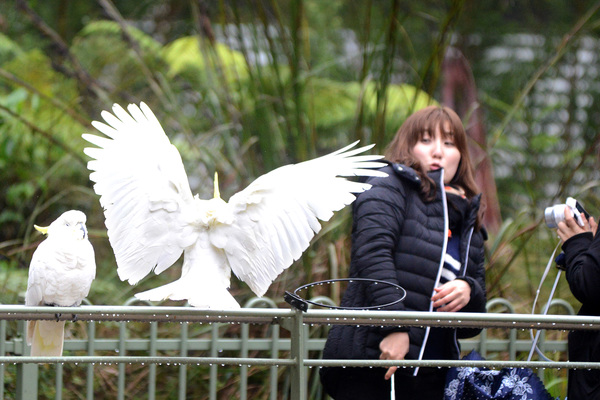
Everyone loves free food, especially birds, but what happens when the food stops?
In March 2019, the Sulphur Crested Cockatoos that call Grants Picnic Ground home were dealt a checkmate by Parks Victoria when they confirmed that the feeding of birds would be banned from February 2020.
Furthermore, anyone caught feeding them will risk a hefty fine of up to $1610.
That means, no bread, no french fries, no birdseed, nothing. Otherwise, we run the risk of creating a generation of bird bludgers dependent on handouts – and we don’t want that.
According to Emeritus Professor in Animal Behaviour Gisela Kaplan, a reduction in feeding may also result in adverse effects for residents and the birds.
“If it has to be stopped, it has to be done with some degree of knowledge,” she told the Mail.
“To suddenly stop it is a very cruel idea … some birds would have been there for years and may have stopped understanding of how to feed.”
“You can desensitise them and give them less and less, little spots further away, but to stop it one day to another is like throwing a 13-year-old child on the street.”
Earlier this year, Parks Victorian confirmed that feeding at Grants Picnic Ground was set to be discontinued “following conservation best practice, National Park guidelines and community feedback.”
Though, Parks Victoria have not provided comment on whether the ban will be implemented incrementally or abruptly.
“Bird feeding has had impacts on the natural composition of the bird community and other natural values at the site,” a previous statement said.
“This, coupled with the potential risks posed to bird health as well as visitor safety has led to the decision not to permit wild bird feeding under a new lease.”
A Parks Vic media release in March stated that an independent wildlife consultant conducted a study on the site, with the report showing that no adverse impacts would be expected from the removal of artificial feeding and that “birds readily switch to other sources of food if an artificial supply ceases”.
According to Ms Kaplan those ‘adverse effects’ are dependent upon a variety of factors.
“There’s a further problem with regular feeding, which is really devastating. Those birds unlike humans actually plan a number of offspring in accordance with the food is available,” she said.
“If one feeds half the amount and then there’s nothing there, they then don’t reproduce.”
She told the Mail an incremental decrease in food would take at least 2-3 months.
“If you do it incrementally it should be done an 2-3 month period and done at a time when other food sources are readily available … you wouldn’t do it in the middle of winter or in a drought.”
Professor Gisela Kaplan is an Emeritus Professor in Animal Behaviour in the School of Science and Technology and will be releasing a new Book Bird Bonds in September